News
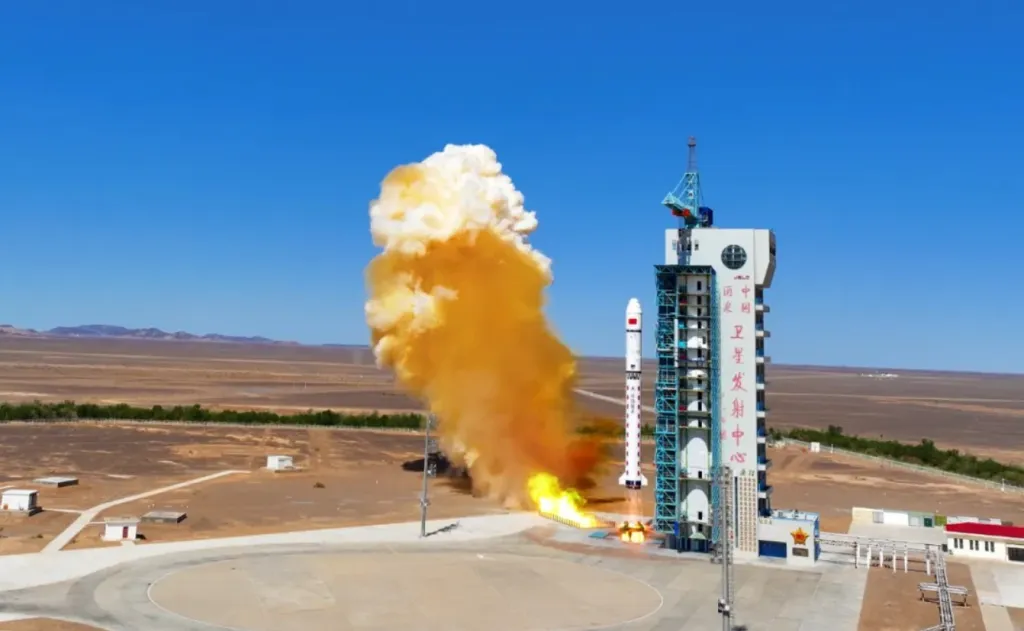
CSES-02 launched
The CSES-02 (China Seismo-Electromagnetic Satellite) satellite, the second in the CSES series, has been successfully launched. The mission is the result of cooperation between the Italian Space Agency (ASI) and the China National Space Administration (CNSA). A substantial Italian scientific component is involved in the mission within the framework of the Limadou collaboration, a network coordinated by ASI together with the National Institute for Nuclear Physics (INFN) and the National Institute for Astrophysics (INAF), with contributions from the National Institute of Geophysics and Volcanology (INGV), the National Research Council (CNR – IFAC), and the Italian universities of L’Aquila, Bologna, Naples, Rome Tor Vergata, Turin, Trento, as well as the International Telematic University UniNettuno.
CSES-02 will operate in tandem with its twin satellite CSES-01, launched in 2018 and still operational. The objective of the mission is the observation and analysis of ionospheric and magnetospheric phenomena associated with extreme geophysical events such as earthquakes, as well as atmospheric and Space Weather phenomena, including geomagnetic storms and high-energy solar particles.
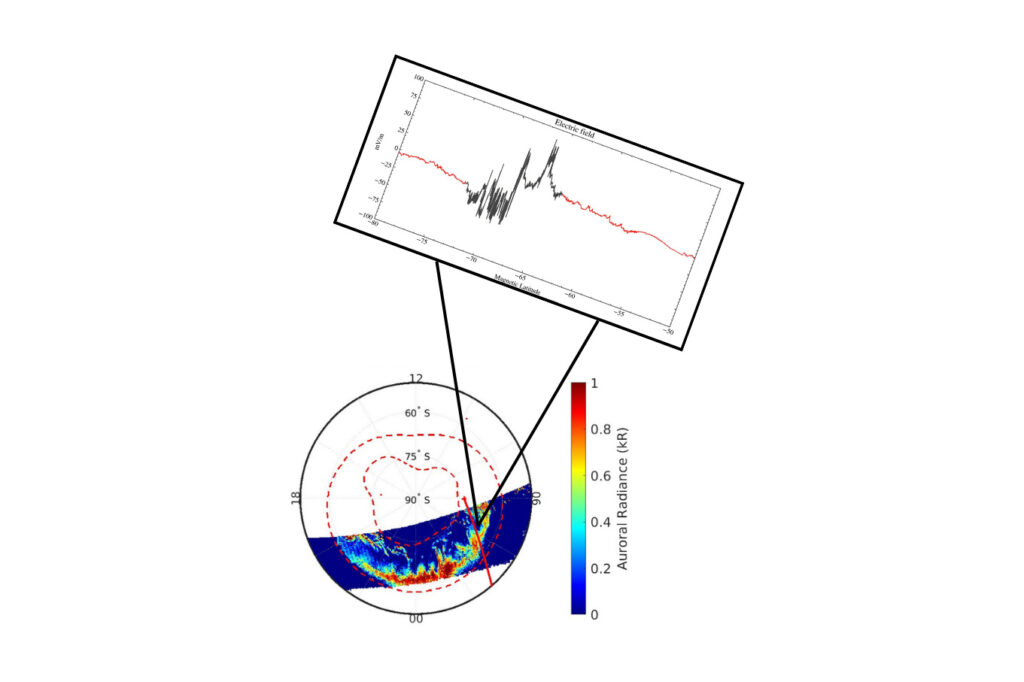
Italy’s participation in the mission, led by ASI, places the country at the forefront of technological and scientific development. Two of the eleven instruments onboard the satellite were designed and built in Italy: HEPD-02 (High-Energy Particle Detector), a high-energy particle detector developed by INFN in collaboration with CNR and academia, and EFD-02 (Electric Field Detector), jointly developed by INFN and INAF for electric field measurements. Both instruments have been redesigned to enhance their performance and the scientific content of the data. Thanks to these instruments, CSES-02 will be able to explore new frontiers in the understanding of physical phenomena occurring between the lithosphere, atmosphere, and ionosphere, with particular emphasis on the search for possible space–time correlations with strong seismic events. The mission represents a concrete example of how international scientific cooperation can translate into technological progress and into the capacity to address critical challenges such as environmental monitoring, natural hazard forecasting, and the understanding of Earth–space interactions, through the coordinated efforts of space agencies, research institutions, and universities.
“The launch of the CSES-02 mission represents a moment of pride for the Italian Space Agency, which led the development of all the Italian instruments onboard the satellite, designed, built, and tested in the laboratories of the participating institutes, demonstrating the extraordinary capabilities of our research system,” said Francesco Longo, Head of the Earth Observation Unit at the Italian Space Agency. “The mission data will be made available to the scientific community through ASI’s SSDC data center, with the aim of promoting multidisciplinary research in the fields of geophysics, ionospheric physics, and Space Weather.”
“With the launch of CSES-02, the first satellite constellation dedicated to the space-based study of rapid geophysical phenomena is taking shape. The analysis of data collected by its twin, CSES-01, has led in less than seven years to the publication of more than 200 high-quality scientific papers,” commented Roberto Iuppa, INFN National Coordinator of the project. “Today, thanks to increased sensitivity and reduced revisit time, the scientific prospects of this mission are further enhanced. INFN was responsible for the development of the HEPD-02 (High-Energy Particle Detector) and EFD-02 (Electric Field Detector) instruments, two measurement systems with unprecedented performance.”
“INAF, in collaboration with INFN and with the support of ASI, developed and qualified the EFD-02 instrument for electric field measurements, leveraging its long-standing expertise in space plasma physics experiments. EFD-02 enriches and completes the remarkable suite of instruments onboard CSES, enabling the mission to achieve unprecedented interdisciplinary scientific results,” stated Piero Diego, INAF Senior Technologist and Deputy Principal Investigator of the EFD-02 instrument.